Sunday, 21 February 2016

Miss Fula Gambia Edition 2016

The miss fulbe was a success last night. Close to 20 fulbe Africa members were in attendance more than thousand of Fulani and non Fulani entrance of night show miss Fula edition along side kairaba avenue. Thank you all for for attending and showing solidarity with our partner Association. The Fulbe Africa prize for the best traditional outfit was won by contestant no. 5. This was a cash prize of D1000
President Ousman Sow said ''Miss Fulbe is no doubt one of the best annually organised pageant in the Gambia, last night's event was great and well organised. Yusupha BaldehAbdoulie Korkah Bah Jainaba Jallow and the rest of d team, thanks for bringing us the only #MissFulbein the Gambia. 
Congrats to all contestants most especially the crowned winner and the winner of the #FulbeAfricaprize for the best traditional outfit.....

Iedi Balde siad''The annual Miss Fula was superb last night. Kudos to the organisers. You've created a unique platform for our young girls. 
I was honoured to be honoured to be part of the ‪#‎judges‬. This beautiful, elegant and outspoken young girl worn the crown. Can't wait for the 4th edition...
Kaddijatou Maali Jallow said ''


The miss fulbeh was nice,beauty was displayed and off course talent was promoted too,it's a very good initiative by the organizers in which the culture,and tradition of fulbeh is preserve for other generations to come.

By Alphajoe Aj Jallow
Manangin News Editor

Wednesday, 17 February 2016

FULBE AFRICA TURNS 3 to clock

Today marks 3 years since Fulbe Africa was formed, the association was formed with three main objectives of Preserving our Culture, Promoting the language, and promoting unity amongst all Fulbe. February 2014, Fulbe Africa Registered in the Gambia as a charitable Organization with the ministry of Justice. Since its establishment in 2012, Fulbe Africa has organized different activities which are in-line with its objectives. In August 2013, Fulbe organized its first anniversary celebration which was graced by traditional Fulbe musicians and Fulbe from all works of Lives. 
13th December 2014, Fulbe Africa celebrated its second anniversary in the Gambia in Grand style which was one of the most popular cultural programs ever held in the Gambia. Several Fulbe musicians and traditional singers were featured, there was a showcase of pulaarr culture and drama through drama presentations by 5 Fulbe groups drawn from different areas of the country and speeches from well-known Fulbe.
On 13th June 2015, Fulbe Africa held the first ever Fulbe conference in the Gambia. The conference was focused on the role of the Fula language in conserving the culture, traditional and history of the Fulas. The conference was attended by prominent Fulbe in The Gambia and speakers during the event were drawn from different Fulbe communities.
On the 19th July 2015, Fulbe Africa was invited to a popular pulaar show hosted by popular presenter Kaddijatou Jallow on GRTS TV. The association was represented by its President Ousman Sowe, Vice President Mariyam Sowe and Public Relations Officer Edie Baldeh. The association has been invited to different talk shows on different radios for the past two (2) amongst them are Afri Radio, Hot FM, Star FM, Capital FM, Paradise FM etc.
Fulbe Africa has partnerships with over 8 Fulbe Associations in the Gambia.
Ousman Sowe
President FULBE AFRICA

ROUGUY DIALLO, THE ORIGINAL FRENCH GUINEA THAT OFFERS A NEW RECORD

Qualified to compete in the rally Düsseldorf Rouguy Diallo won the record of France hopes indoor triple jump with a jump of 13.97 m. Record holder of France junior indoor and outdoor, the Guinean origin has not finished yet to show its performance in the European Athletics. For what is his second competition of the season, Rouguy Diallo has registered his name in the history of French athletics by finishing in third place in the contest for his second try at 13.97 m. She
also clears the shelves the name of Teresa Nzola Meso Ba who previously held the record of France indoor hopes with his 13.86 m since 2005. The one that celebrates 21 years Friday is satisfied with his work. "I felt good, I managed to reproduce some trick training. I'm not necessarily happy with the performance but happy with what I technically product. "
Issa Bah


AUDIO – Dr. Bawumia’s Wife Is A Fulani – Koku Anyidoho

To prove his earlier claims that not all Fulani herdsmen are foreigners – the deputy General Secretary of the ruling National Democratic Congress [NDC], Koku Anyidoho has made a shocking revelation.
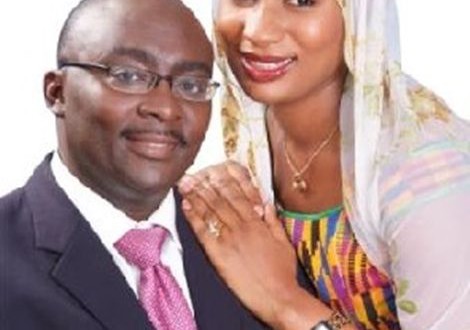
Surprisingly, Samira Bawumia the wife of NPP’s running mate, Mahamudu Bawumia according to Koku Anyidoho is a Fulani.
“Samira Bawumia the wife of Dr. Bawumia is a Fulani, her brother Abu Ramadan is a Fulani. Meanwhile it is this same Fulani boy [Abu Ramadan] who took the NPP’s NHIS case to court which they won. So why should we kill Fulani’s if some NPP members are Fulanis?” he questioned in an interview on NEAT FM’s morning show ‘Ghana Montie’.
Asante Akyem Agogo has been in the news for the past weeks over the killings of natives by Fulani herdsmen – the youth in the town have vowed to retaliate violently since all efforts to stop those Fulanis have been unsuccessful.
But Koku who is against the act alleges that the NPP is behind what could lead to a civil war and xenophobic attacks.
“The NPP is isolating people, this shouldn’t happen,” he told host Kwasi Aboagye.
By: Peacefm Online

Saturday, 30 January 2016

'Fulani women more beautiful than Ghanaian women' – Irbard

Fulani women are more beautiful than Ghanaian women, and, so, there is no need for Fulani herdsmen to go raping Ghanaian women as always claimed by indigenes, who play host to the nomads,” security analyst Irbard Ibrahim has said.
According to him, Fulani women are “light-skinned and attractive,” and, therefore, it is puzzling for their men to be constantly accused of raping the relatively not-so-beautiful Bantu-looking Ghanaian women.

Apart from accusations of farm-trampling by their cattle, shooting, killing, and maiming of indigenes, who play host to them, rape of local girls is a constant feature on the league table of sins of the nomadic herdsmen.

Sheikh Ibrahim, however, told ClassFMonline.com that the rape charge against the herdsmen is illogical, since, in his view, the Fulani men will not prefer Ghanaian women to their more “dainty” and beautiful Fulani women. 

A similar view was expressed last year by the national president of the Fulani community in Ghana, Prof Osman Barry, who described as “ridiculous” claims that Fulani men have been raping Ghanaian women.

Debunking the rape claims against his kith in an interview with Morning Starr host Kafui Dey on Starr 103.5FM on Monday January 12, 2015, the Historian said: “Now you, as you are sitting here my brother, you know the Fulani women how they look like. Can you have any comparison to them?”

“To me it looks very funny because if you say somebody is raping your wife, unless he doesn’t have a wife like yours. And somebody has a wife more than yours, so what are you talking about? If you are talking about sex or you are talking about attraction, these [Fulani] are people who have the most beautiful women in the whole world,” he stressed.

According to him, the Fulani “have very elegant and beautiful women in Africa, south of the Sahara because they are not Negros.”
 
“They are a crossbreed of what we call the Caucasians: The white and the black put them together and they produced…the chocolate colour, the milk colour,” Prof Barry who is also a retired diplomat said, adding that being muslim nomads, the Fulani always need “divine protection”, therefore, “somebody with this nature and everything will not leave his beautiful wife, charming woman and very attractive complex colour and then go and chase another wife…for what reason.”

The Fulani are one of the largest ethnic groups in Africa, numbering approximately 40 million people in total. They are also one of the most widely dispersed and culturally diverse ethnolinguistic groups in Africa.

They are bound together by the common language of Fulfulde. A significant proportion of them – an estimated 13 million – are nomadic, making them the largest pastoral nomadic group in the world. Spread over many countries, they are found mainly in West Africa and northern parts of Central Africa, but also in Sudan and Egypt.

There have been recurrent skirmishes between the Fulani in Ghana’s Ashanti region – particularly in Agogo, as well as other areas in the Eastern region – which have resulted in shootings, killings, decimation of farms and rapes.
Credit: Classfm
Written by Isaac Asempah
source of Happyghana

Saturday, 9 January 2016

Notes From Atlanta'' Is There Such a Thing as “Hausa-Fulani”?

By Farooq A. Kperogi, Ph.D.
Twitter: @farooqkperogi

A reader of this column repeatedly challenged me to justify calling President Muhammadu Buhari a “Hausa-Fulani.” He said he expected me to never give my stamp of approval to the label, which he correctly said was invented, or at least popularized, by the southern Nigerian press. I promised to write on the topic but never got round to doing it.

Then, a few weeks back, I had cause to exchange thoughts on this issue with cerebral Marxist scholar and Daily Trust columnist Professor Jibrin “Jibo” Ibrahim, of the Center for Democracy and Development, who is from Kano. Professor Jibo thinks there is a distinct identity that can legitimately be called “Hausa/Fulani.” "In 1903 the British conquered a Caliphate where a Fulani ruling dynasty was ruling the Hausa people and they made a compact with that dynasty. So yes, there are distinct Hausa and Fulani people, well many are mixed, but there is a political category called Hausa-Fulani that draws from the jihad of 1804," he said.
I disagree, not least because he invoked colonial conquest as the social and political basis for the legitimacy of his claim. But, then, why did I call President Buhari “Hausa-Fulani” if I disagree with Professor Jibo? Well, when we interviewed Buhari in 1999 at the Weekly Trust, I distinctly recall him telling us that he loved the label “Hausa/Fulani” because it perfectly encapsulates the tapestry of his identity; his father, he said, is Fulani and his mother is half Hausa and half Kanuri. Besides, although he is ethnically Fulani patrilineally, he is culturally and linguistically Hausa. What better label can capture this ethnic and cultural coalescence than “Hausa-Fulani,” he asked. Well, I like to respect and call people what they call themselves.

But many northern intellectuals, including the late Dr. Yusufu Bala Usman, Professor Jibo’s former teacher, resent (in the case of the late Dr. Bala resented) the label “Hausa-Fulani.” As someone who studies the rhetorical construction of identities, I also think “Hausa-Fulani” as an overarching ethnic category for people who live in Nigeria’s far north is meaningless. And here is why.

 It isn't only in Hausa land that Fulani dynasties ruled over, merged with, and became culturally indistinguishable from their non-Fulani hosts. You can find examples of that sort of cultural and ethnic alchemy in Nupe land and in Ilorin, yet we don't have fossilized hyphenated identity labels for these people. In other words, there are no "Nupe-Fulani" or "Yoruba-Fulani." So why should there be "Hausa-Fulani"?

I admit that the cultural and ethnic melding of the Hausa and the Fulani people (whose languages are not only mutually unintelligible but also, in fact, belong to different language families) is on a scale of intensity that is unexampled anywhere in Nigeria—perhaps in Africa—, but that doesn't, in my opinion, justify the appellative hyphenation many of us have become fond of.

 In most Nigerian cultures, descent is traced patrilineally. I am Baatonu because my father, my grandfather, my great-grandfather, etc. are—or are thought to be—Baatonu; the ethnic identity of my matrilineal lineage is immaterial to the determination of my ethnic identity. Nor are my contemporary associational, cultural, or linguistic identities factored in in determining my ethnicity. A person who is patrilineally Hausa is Hausa irrespective of the amount of Fulani blood in him or her, which makes the hyphenation of "Hausa" and "Fulani" pointless.

What I have described above is broadly true of most African societies. (Certain matrilineal Ghanaian societies are notable exceptions here). That's why the Luos of Kenya regard President Barack Obama as a Luo. Although he is culturally American and has no connection with the Luo cultural and linguistic universe, except on a vicarious and symbolic level, he is seen as "authentically" Luo by the Luo in Kenya and elsewhere. The Luo would most certainly have never had this much emotional investment in Obama's “Luoness” had he been Luo only on his mother’s side.

So the hyphenation of ethnic identities on account of cultural, ethnic, and linguistic commingling is an anthropological anomaly on the African continent. Although the "Hausa-Fulani" label has come to stay, it can't be justified historically, linguistically, or anthropologically. In its present form, it was invented by the southern Nigerian press, which lacked the historical and sociological resources to make sense of the ethnic complexity of Nigeria's (far) north. So they manufactured a convenient, if problematic, label. Professor Jibo disputes this. “[John] Paden's book on Ahmadu Bello draws attention to the formation of a Hausa-Fulani political identity in Barewa College way back in the 1920s,” he said.

But that doesn’t really say much. We talk of a “Hausa-Fulani” identity today not because some barely mature high school students with vague inchoate ideas about identity thought it into being; we do because the enjoys repeated media mentions and validation. In his classic book titledImagined Communities: Reflections on the Origin and Spread of Nationalism, Benedict Anderson tells us that the emergence of identities in Europe was enabled by the symbolic power of “print capitalism,” by which he means newspapers and books. That was why Buhari, an enthusiast of the “Hausa-Fulani” label, told us in 1999 that one of the greatest, if unintended, favors that southern newspapers have bestowed on the far north was their invention and popularization of the Hausa-Fulani label.

Nevertheless, one of my quarrels with the label is its notorious imprecision. For instance, the late Sir Abubakar Tafawa Balewa was and still is often called a “Hausa-Fulani” by the southern press even though he was born of a Shuwa Arab father and a Fulani mother.

Another problem with the label is that it erases the identity of millions of ethnically and culturally “unmingled” Fulani people in Nigeria’s northeast and elsewhere. Former super permanent secretary Malam Ahmed Joda once told us at the Presidential Villa (when I worked there) that the first time he left his native Yola to Lagos in pre-independence Nigeria he couldn’t speak a word of Hausa, but Yoruba people in Lagos couldn’t wrap their heads around that. It made no sense to them that a Fulani man couldn’t speak Hausa since both identities have been conflated and made to seem indistinguishable in the popular media.


 The examples are legion, but the point is that "Hausa-Fulani" is an inexact, endlessly kaleidoscopic identity label that even includes non-Hausa-speaking Kanuris and all Hausa-speaking northern Nigerian Muslims who are ethnically neither Hausa nor Fulani. 

Wednesday, 30 December 2015

Preserving the Pulaar culture amidst modernisation: Interview with Fulbe Africa’s Ousman Sowe


Young Gambians from the Fula ethnic linguistic grouping are poised to inspire a renaissance among Fula people from across Africa. Fulbe Africa, through online and offline outreaches has since been organising and mobilising Fula people around reclaiming and promoting the Fulbe culture. Read below our interview with the organisation’s president, Ousman Sowe.

What’s On-Gambia: When was Fulbe Africa formed and for which purpose?
Ousman:Fulbe Africa was formed three years ago on social media, it started as a group on Facebook and later registered with the Attorney General Chambers under the Ministry of Justice as a charitable organization. The main objective of the association is to promote unity amongst the different Fulbe dialects, promote Pulaarr and preserve culture and tradition (good cultural and traditional values) and preserve and promote the use of the Pulaar language.
The Association is not only limited to The Gambia. We hope to establish branches in other countries in the not-too-distant future hence the name Fulbe Africa.

How many active members do you have and what are their ages.
We have so many active members residing both in The Gambia and abroad. Our group on Facebook has over 21,000 members who live in not-less than 30 countries. There are members in different parts of the world and people who are not even Gambians. We've a member from Liberia who traveled from his country to attend our event.
Among the members do you have people from other ethnic groups?
All members are Fulbe, it is good to note that Fulbe Africa is a Fulbe Association. We want to associate with everyone but as at now our members are Fulbe. However, on the Facebook group we have hundreds who are not Fulbe which is great.
You recently celebrated your anniversary. How did you manage to get that huge crowd at Alliance?
Our programs are usually interesting, educative and exciting. Thus no one wants to miss them. I think it's one of the best if not the best organised in The Gambia. A lot of people look forward to our anniversary now because they see what they don't see anywhere. Everyone loves the different activities in our anniversary and remember, it’s always free with free food. The anniversary was well attended and perhaps more than 50% of the attendants had to remain standing till the end of the event. We are thinking of moving to a bigger venue next year because we’ve seen that Alliance is too small for the events now.

What were some of the activities on the stage that night?
We had different activities which were all very interesting. We had the cultural parade, drama skits, performances by different traditional troupes and pulaar rap artists, demonstration of traditional pulaar marriage ceremony, art exhibition, showing of Fulbe Africa made documentary on cattle herding (Ngainaka), review of books written in Pulaar, presentation of traditional Fulbe brides from different dialects.
Where do you get funding for Fulbe Africa?
Fulbe Africa members provide all the funds for all the activities we've had since establishment.
Are the wealthy Fula businesspeople not supporting?
Well we have not approached them for support, but they have shown a deep interest in our activities and some have been supporting us morally, which is just great.
How involved is your organization in the fight against early marriage which is rooted in many Fula communities?
Early marriage exists almost in all areas and it is our duty as people to sensitise our people. We have always used our platforms to educate and sensitise our people. That is why we identify groups to do dramas on areas that affect our people. Last year we had one on forced marriage and as we go we plan to sensitise our people on issues that affect them.

Anything else you want to say?
Fulbe Africa is a non-political and non-profit making association. We are mainly young people who have never known each other, but share a common interest in promoting and preserving culture. We love everyone; we believe that all people are equal. We believe that it is our responsibility as young people to ensure that our culture and tradition and language is preserved for generations yet unborn. Our culture is our identity and the extinction of African languages is going on at an alarming rate. We believe this is one way in which integration can be achieved. I challenge all ethnic groups to form similar associations. The development and promotion of African languages is a factor for integration and we want to assure you of greater things in 2016.
I wish to thank you on behalf of Fulbe Africa for granting us this opportunity.

Source of Whta'on Gambia
Written by Alieu Khan