Wednesday, 17 January 2024

The original Fulani appear to have been fairly widespread in North and Saharan Africa from a very ancient period


 The original Fulani appear to have been fairly widespread in North and Saharan Africa from a very ancient period. They are probably mentioned in northern Algeria or what was considered Mauritania Caesarea as the Fulitani or Barzu Fulitani on the late 4th map of Julius Honorius (Mommsen 1867, p. 28 and 62). They are also mentioned as having come down a few centuries later from the Tichit region by the Tariq es-Sudan written in the 1600s. They, thus are likely the Warith/Wariz (a probable variant of Barzu) said to have been pushed down from the Mauretanian Adrar region by the Arab Quraishi conqueror, Uqba ibn Nafi and converted to Islam.


As for the Banu Warith or Waritan of the medeival period, they are described as a  clan of the Sanhaja or of the Geddula or Banu Joddala Berbers ( the latter were considered by that time a branch of the Sanhaja) by Arabized writers such as Ibn Hawqal and El Bekri and others. (Levtsion and Hopkins, 2000, pp. 50, 67, 237; Palmer, 1970, p. 61)     


By the 10th century and 11th century Fulani were living amongst several peoples of other Nilo-Saharan groups who had mixed with and adopted the dialect of Niger-Congo groups in kingdoms of the Sudan. The Fulani gradually spread as far east as Ethiopia where they are known as Bororo and from Mauretania across Senegambia along the West African costs and savannah they spread to places like the Ivory Coast, Benin, Togo and Burkina Faso, but appear to have been the same adversaries appearing in ancient Egyptian tomb paintings of the time of Seti and called Tjehenu.


Many of the groups that today speak the Fulbe, Fulfulde or Pulaagu dialects are in fact a mixture of the original Fula or Fulitani and these various Songhai and Mande ethnic groups. They are also associated with the people and place name Futa or Futabe.  A good example of such groups are the Toucouleur, formed and perhaps named from the Takruri and Fulani who had come to occupy the region of Futa Toro and Futa Jallon. In the northern Sahel and Sahara the group preserving the earliest Fulani lifestyle are known in Western texts “Wodaabe”a variant of the earlier Futa-be. 


 Although the Fulani had been mainly vassals in the early Sudanic kingdoms of Songhai and Ghana, by the 1500s the Fulani were at Macina/Massina in the Middle Niger river region in Mali. They are associated with coming to occupy and dominate the Empire called Sokoto and kingdom of Bornu originally founded by peoples of Nilo-Saharan and Tuareg ethnicity.


The origins of the Fulani have stir some lasting controversy over the last several decades due to their physical appearance or phenotype, Arabic records concerning their origins, the presence of Zebu cattle thought to be native to India, certain inconsistencies with regard to their phenotype and their current linguistic affinities which were thought to not match their phenotype. Due to European colonialist ideas about indigenous African origins and especially North African “racial” origins, the notion has gradually evolved – as it has with the Tuareg and other dark-skinned Africans once prevalent in North Africa -  that their ethnic roots were “enigmatic” or “unknown”. Yet, in fact, the earliest Fulani were one of the few peoples for which there is an abundance of evidence for origins in the Sahara oases and North Africa since the Neolithic. The evidence is both archeological and anthropological and tends to show that original Fulani population belonged to a group of neolithic pastoralists in the central and northern Sahara who were spread to Kharga, Kerma and possibly further east in Africa in later times. They appear to have been among the first people to be known to ancient Egyptians as under the names Tjehenu or Temehou.


Their presence in stone age north Africa probably led to contact with other groups as far back as the late stone age which has led to their current so–called non-African features such as notably lengthy and less frizzly hair than other west African tribes and perhaps the introduction of a curvature to their innately narrow long noses.


As for the current linguistic situation of the Fulani, it should be said that there are many peoples in Africa that over the past 2,000 years have adopted dialects foreign to their own that subsequently evolved into newer forms. This has happened for various reasons, often due to trade or immigration.  A good example is the current situation of North Africa where many groups of varied ethnicity and diverse biological origin over the last 2,000 years have adopted either the Arabic or Berber dialects and claim either Arabic or Berber origin or nationality today.


At one time Berbers themselves were said to have been largely “Romanized” while now it appears descendants of Romans, Vandals, Scythians, Central Asians and other peoples who have settled in North Africa (or have otherwise been brought in) have themselves been somewhat Berberized and Arabized through admixture and adopting of certain linguistic and cultural patterns and mores.


The Nilo-Saharans are an example of indigenous Africans who are known to have mixed with and adopted Niger-Congo dialects of the Atlantic branch, becoming the Sarakholle, Serer, Soninke, Djallonke, Jahanke and other groups now designated “Mande” or “Mandinke”. Thus, the fact that certain groups now speak a specific dialect doesn’t always say much about their cultural origins.      


Due largely to Fulani physical appearance and culture, early colonial observers viewed them as part of an imagined great warlike “Caucasoid” race near black in complexion which they called “hamitic” that had amalgamated with what they called  “Negro” tribes. This idea was spurred and bolstered by the fact that when colonialists first encountered Fulani in the Sudan they were often viewed by other Africans as a separate, lighter-skinned caste in places like the region of Massina where they were even described as “whites” by their own and in Arabic writings (a description that is used in Africa for many black African groups that are somewhat dark brown in tint rather than black or brown black).


Furthermore, in many places there was a certain ethnic rivalry between Fulani and other groups as is common between more nomadic and more settled agricultural peoples in Africa. And these tensions (which haven’t completely disappeared in Africa since they were aggravated by European colonialist notions) in various regions was often attributed to “racial “differences between the “lighter-skinned” “nobles’ of “hamitic stock” and the so-called “black African” or “Negro” agriculturalists.


Of course Africa is made up of diverse populations of various complexion and phenotype from the yellow brown of the San and Kung Bushmen to the blue black of some Nilotic groups, and copper or bronze brown of certain Fulani and Beja. None of these groups can obviously be considered more black or African than the other as each has specialized development that has led to their particular phenotype.


That being said, it is true that the Fulani especially the northern Fulani like the Woodabe often have a lighter caste to their skin than African tribes they live amongst and very often preserve features that are similar to the Nilo-Saharans and Cushitic speakers further much further east. The latter also often have a complexion that is often more of a dark copper brown than it is black brown. Still the Fulani were and are one of the major African groups contributing to the ancestry of blacks in the Americas (until recently known as “Negroes”), a fact that is now being confirmed by genetics, but was already established from colonial records in the U.S. and elsewhere. Thus, the conception of them as a “non-black” African group, as had been commonly suggested was a bit silly to entertain – and disingenuous, to say the least.


Fulani came in large numbers to America during the Atlantic slave trade and have been said by scholar Sterling Stuckey to have greatly influenced the cowboy and cattle culture in the United States. They have been cattle and sheep herdsmen for thousands of years and have kept many traditions alive. Herdsmen often affectionately name each member of their herd and know each by name. Cattle were not slaughtered for their  meat, but useful for their milk and other things. Long ago the ancestors of the Fulani and related people came to make the cow a symbolic of their gods in the Sahara and along the Nile.


Abdul-Rahman had been a student at Timbuktu (Tin Buqti) even then a world famous capital of learning in Mali. But he fell into hard times after serving as a leader in battle under his father against an enemy tribe. After being ambushed by his enemies with some of his war party on the way back to his father, he was sold as a prisoner of war by an enemy tribe. Like numerous other Fulani - Abdul-Rahman was brought to America by slavers. The year was 1788, and he was 26 years old. He spent the next 40 years as a slave and slave overseer in Mississippi. He won his freedom and liberated his family moving to Liberia where he fell ill and died only a few months later.

Friday, 6 April 2018

Fulani's World join us to congratulation to our Fulani brother DICKO JAMAL award

Good evening

With great joy, and with a voice full of love, we are pleased to announce that the international prize (ANF INTERNATIONAL AWARDS 2018) goes to Ahmed Jamal Dicko from West Africa.

We are very fortunate to have this nice gentleman on all fronts, helping to spread la's mission which is pricipalement to serve our community, but above all to contribute to increasing humanitarian services for a better world.

Mr. Ahmed has a great ambition to travel all over the world and serve his turn. For some time in a position of a committed activist, he has defended the weak in resource, expressed his name, all for a more social and equitable justice for all. It also advocates for the epanouissement of the community, with great bias and without discrimination. It's that expressive quality that makes its strength.

The jury studied his huge commitment to anf, and praised his efforts by giving him a heartfelt tribute at the ceremony. And this gentleman's choice for anf international awards 2018 is unanimous. This humble price will never be the equivalent of man's value.
We hope to invite him to participate physically in the future anf annual award night here in New York.

And we would like to thank Malick Audacious Jatta, and Amadou Tall Peuhlthe nominees of this year for the 2018. ANF INTERNATIONAL PRIZE THEY OCCUPY 2th place for malick, and 3th place for amadou. Thank you to all members of this humanitarian organization. You Êtant here with us, and even far from your respectable countries, we make the difference that the world wants to see. Much Love 
Well American New Friends is an Association which is growing bigger by day. The purpose of ANF is to facilitate easy ways for Migrants to acquire their documents when they find themselves in America. The Association is also to empower youth who intend to work for humanity. Social empowerment is the main mechanism and focus of ANF.

Sunday, 6 August 2017

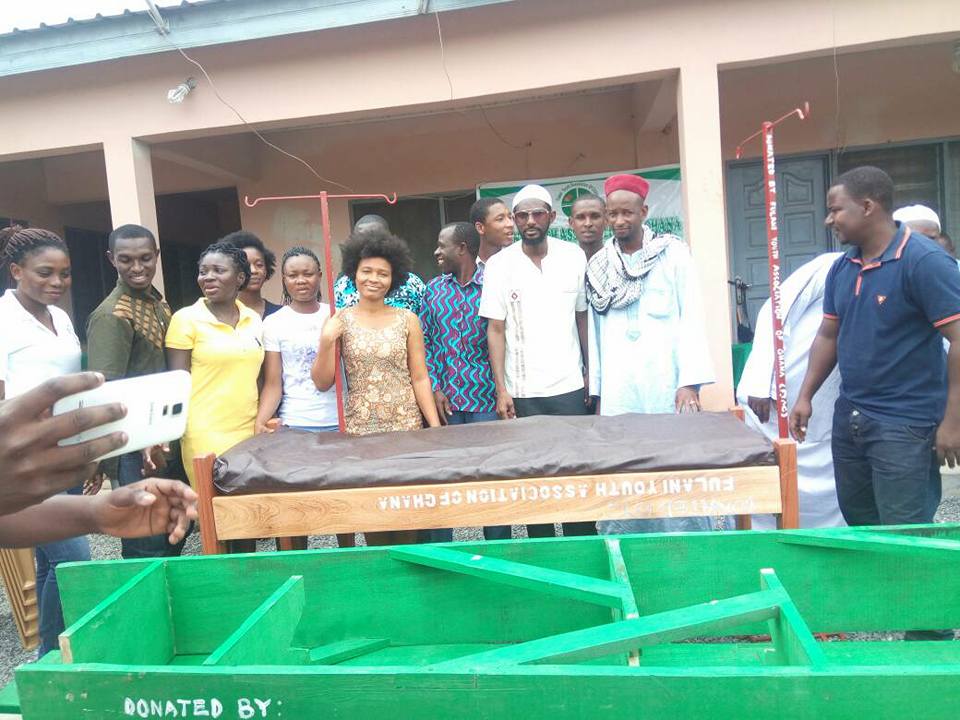
Yesterday FULANI YOUTH ASSOCIATION OF GHANA (FUYAG)

Alhamdulilahi!!
Yesterday FULANI YOUTH ASSOCIATION OF GHANA (FUYAG) has successfully donated these items to a clinic and police at Asutuare Junction in the Shai Osudoku District. The items are Benches, plastic chairs, beds and desktop computer.
Kudos to the members and the community at large, Insha Allah we will continue doing this goodwill gesture throughout Ghana.
by Diallo Idris Sambo


Friday, 24 February 2017

Mali: Victims of murder-murders-exactions-theft of cattle: Fulani denounce the laxity of the State

Denounce the absence of the State in several localities. Condemn the serious human rights abuses perpetrated against the peoples. Rebel against amalgam. Describe the treatment of information from the international media. Deploring the arbitrary arrest of innocent people. Calling for the immediate and unconditional release of those arrested in the central and southern parts of the country ... The peoples' associations were reassembled as a whole against the lax attitude of the state in the management of the situation of the peculiar communities in the regions of Mopti And Ségou. It was Saturday, February 18, 2017, in the conference room of the press house. The members of the association of friends of the culture of the "Tabital Pulaaku" culture took to witness the national and foreign press on all these abuses lived by their parents.

The joint press conference was hosted by the President of Tabital Pulaaku-Mali, Abdoul Aziz Diallo, assisted by his Deputy Chairman, the Honorable Idrissa Allaye Sankaré, as well as representatives of Mali's other associations, Boubacar Cissé, Abdoulaye Dicko and Mrs. Haidara Aminata Dicko.

The President of the Islamic High Council, Imam Mahamoud Dicko, the President of the High Council of the Malian Diaspora, Chérif Mohamad Haïdara, the notables, Peulh communities and cadres attended the conference.

Configuration and menu: calm atmosphere, security forces, Fatiha, presentation of the security situation of Mali from 2012 to the present day.
Unsurprisingly, it was the tragic events in Ké-Macina on Sunday 12 February 2017 that dominated the debates during the day that the President of Tabital Pulaaku-Mali called a day of anger, sadness and discernment. According to Abdoul Aziz Diallo, the Ké-Macina killings are far from being an inter-communal confrontation. For him, these are attacks that have caused the death of dozens of people including pregnant women, children who have been charred. "We hurt, we have long suffered, suffered in our dear and in our bodies. And this is because of the looting, the sequestration, the arrests of our populations. And today, it is an opportunity to come out and denounce these acts of violence against the peoples communities across Mali. Yes, the Fulhs have suffered, because of the amalgam! Innocents, sick people, old people are arrested and assimilated to jihadists. We can not confuse all Peuls with Amadou Kouffa and the Macina Liberation Front, which we regard as creations, "he said.
After expressing his deepest condolences to the bereaved families of Ké-Macina and Dialloubé and wishing for speedy recovery to the wounded, Abdoul Aziz Diallo said he was willing to collaborate with the authorities to ensure peace in the Mopti region.

For the vice president of Tabital Pulaaku-Mali, the Honorable Idrissa Allaye Sankaré, the word confrontation is not at all appropriate in this context: "A group of ethnic groups rose and returned to the bush and s' Is put to murder all that is Peulh or that resembles a Peulh, without distinction ".

According to him, no investigation has been carried out to locate the responsibilities. Yet, he continued, the state must assume in order to put an end to the reflection that all Peulh is jihadist. Hon. Sankaré says the government has shown its limits. "The only solution to this problem is that the Fulani must defend themselves and by all means," he said.

Youssouf Samaké

Saturday, 11 February 2017

Ranking Gambia Fulani fitness Singer

FulaManding is a Gambian versatile artist started music 9 years ago. He recorded so many track within the years and his music has international travel to the globe. FulaManding is an Artist who mostly sing in fula and madinka. Who's tribes is said to be a Fulani
, originally from the central/upper part of the country Bansang/Basse. FulaManding has so many tracks likely to 20 or more but didn't still release an Album or mix tape. But according to FulaManding the reason why he's still yet to produce an Album or mix tape is two things he mentioned, one lack of financial support and a good management since in the beginning. He stated two he is not that in a hurry of putting himself into a profit less contract. He stated that he is really looking forward to work with the right people for his Album. He also mentioned that the best way to get what you want is to be perseverance and wait for the right time. He said He did so many projects, songs with live instruments and videos as well. Which most of the time he finance for himself. I asked him about the relationship between him and the fulbeh Africa, As he is a fulbeh Africa Ambassador, He replied that fulbeh Africa is his family which he is part of and very proud of. He started that his relationship with fulbeh Africa is now going to three years and it's becoming more stronger every year as the organization is growing bigger too. I later ask how he begins with this family. He replies, the link was brought by a brother and a friend a member of the fulbeh Africa and also the former president of his humble fans club who recently stays in abroad for studies and he is Edie Baldeh whom he promised never to forget, and has done a lot for him FulaManding, he started. Inclusion I asked him when is he actually ready to produce the Album. He said very soon insaa Allah, he is just looking forward good links and support from any good direction especially on financially. He started that full Album Tracks are written down different from

Friday, 29 April 2016

Nigeria: They are not Fulani Herdsmen, It is Planned Ethnic Cleansing, Wake up IDIOTS - By Ogbo Ogbo

           --- THEY ARE NOT FULANI HERDSMEN - WAKE UP IDIOTS!!!! ----

They are not "Fulani herdsmen!!!!!!!!!" 

••• Fulani herdsmen? Liars!

It's called the "Trojan Horse!" strategy,  people!
There's something bigger than those cows on your highways and forests!
Never have we had as many cowards in the Nigerian media and "civil rights movement" as we do today!!! No more voice of influence! Gone are the Ganis, the Dele Giwas ... only the federal appointment-seeking, Twitter handle warriors remain.

Cowards! The media won't use the politically incorrect words such as "ethnic cleansing," "mass murder" and "religious persecution" even though those are exactly the three things happening right now in Nigeria!!!!

••• And crazy self seeking "men of God" are busy telling us to speak well of Nigeria because "our words are affecting Nigeria!" Nonsense! "Woe to those who call evil good!" declares the Scripture. The foundation of God's throne is RIGHTEOUSNESS and JUSTICE (Psalm 97.)

Life in the "Middle Belt" is almost snuffed out, there's ZERO protection for the Middle Belt either from Nigeria, African Union or the United Nations. The poor people of the Middle Belt sleep and wake up daily in the zip codes of death by "Fulani herdsmen."

••• The infiltration of the ancestral lands of the East is complete! Their settlements and huts litter every forest in Eastern Nigeria. It's no different in Ogun and Ondo States. The rural lands of Edo State are soaked with their cow dung. It's a well articulated, well funded mission!
Even my small cassava farm back home was surrounded and the crops destroyed by the AK-47 wielding "Fulani herdsmen." Who gave these illiterates such sophisticated weapons? Who trained them to use them?

What's more? The constitutional backing for the "Fulani herdsmen" impunity is almost through at the National Assembly. It's called the "National Grazing Reserves and Stock Routes." (For 'National,' read "Fulani!") That would officially allocate the Fulani our ancestral lands from sokoto down to Port Harcourt... and no one, not even your ancestral spirits will stop them thereafter. Very neat! And once your land is grabbed, your existence, your identity is expired ... because you can't live in the atmosphere. You're not a bird.

Fulani Herdsmen with Guns
••• Right now, whether in Ogun, Abia, Ondo, Edo, Delta, Ebonyi, Enugu or Benue, if your village makes the mistake of telling the 'Fulani herdsmen,' "Don't pass through our farmland, you're destroying our crops," or "Stop raping our women," that's when you'll understand the full wrath of the Ogas at the top! Those boys know that "our own man is now in charge."
Wake up, idiots! We're at war - government-backed war! And this one is worse than the first! Because your legal defender is your murderer!
People, speak up!!! The hands of the clock are at 11:58!
Have you heard the word "Referendum?" May be the only light in the tunnel right now!!

Source of uzotimes.com

Buhari breaks silence, orders ‘herdsmen’ brought to justice

President Muhammadu Buhari has reacted to the recent upsurge in communal violence by suspected herdsmen, and has ordered the police and the military to “take all necessary action to stop the carnage”.
Mr. Buhari’s directive, Wednesday, followed the latest attack, on Monday, in Ukpabi Nimbo, a community in Enugu State, where dozens of people were reportedly killed by heavily armed herdsmen.
An earlier attack in Agatu, Benue State, in March, killed over 100 people, locals said.
Mr. Buhari has been accused of not responding firmly to the attacks that have spread to other states, and has been widely criticised for his silence.
The Minister of Information, Lai Mohammed, said on Monday the government was working “silently” to end the carnage.
In a statement Wednesday, signed by presidential spokesperson, Garba Shehu, Mr. Buhari said stopping the violence was now a priority for his administration.
Read his full statement:
Following continuing reports of attacks by “herdsmen” on communities across the country, particularly Monday’s attack on Ukpabi Nimbo in Enugu State, President Muhammadu Buhari assures all Nigerians, once again, of his administration’s continued commitment to ensuring the safety of lives and property in all parts of the country.
President Buhari unreservedly condemns the attack on Ukpabi Nimbo and other such acts of extreme violence against communities in other states of the Federation.
Acting on the president’s directive, the Inspector-General of Police and heads of the nation’s other security agencies are already taking urgent steps to fully investigate the attacks, apprehend the perpetrators and bring them to justice.
Ending the recent upsurge of attacks on communities by herdsmen reportedly armed with sophisticated weapons is now a priority on the Buhari Administration’s agenda for enhanced national security and the Armed Forces and Police have clear instructions to take all necessary action to stop the carnage.
In keeping with the President’s directive, the Inspector-General of Police, the General Officer Commanding the 82nd Division of the Nigerian Army and the Director of the Department of State Security in Enugu State have visited Ukpabi Nimbo to personally oversee investigations into the attack on the community and ongoing efforts to apprehend the culprits.
Meanwhile, President Buhari is scheduled to meet with Governor Ifeanyi Ugwuanyi later today to receive further briefing on the attack on Ukpabi Nimbo and discuss additional measures to forestall similar attacks and restore public confidence.
The President urges all Nigerians to remain calm and assured of his administration’s readiness to deploy all required personnel and resources to remove this new threat to the collective security of the nation.
Source of premiumtimesng.com

Terrorists Now Disguising As Fulani Herdsmen Ijaw Youths

The Ijaw Youths Council (IYC), on Wednesday, said that terrorists, who now disguise themselves as Fulani herdsmen, are responsible for the killings of people in remote communities across the country.
A statement signed by its Spokesman, Mr. Eric Omare described as barbaric, the killing of innocent Nigerians in the Southwest.

Omare said the traditional Fulani herdsmen have been conducting their business peacefully for decades without resorting to killing of their neighbours.

He said the sponsored attacks could be a plot by disgruntled persons to pit one ethnic group against the other so as to destabilise the country.

He said: “We are of the view that the attacks are being carried out by terrorists who are disguising themselves as Fulani herdsmen.

“The traditional Fulani herdsmen have been grazing their cattle for decades in different parts of the country without such attacks until recently when the attacks became persistent.”


Sunday, 27 March 2016

Over 260 Fulani herdsmen flee into Ghana

More than 260 Fulani herdsmen have run to the Bole District in the Northern Region as refugees following a conflict between them and the Brifos, an Ivorian ethnic group at Bouna, a border town near Bole in Ghana.
The escaping cattle herders and their families, mostly children and women, ran to Ghana after they were chased out of the town by the locals in Bouna. 
The Brifos were said to be angered by the continued destruction of their farms by the animals of the herdsmen. 
Confirmation                                                                                                                                                                                               The Bole District Police Commander, Assistant Superintendent of Police (ASP) Eric Awiadem, confirmed the development to the Graphic Online in an interview.
He explained that on Friday, March 25, this year, the Bole District Security Committee (DISEC) heard that there was a conflict between the Fulani herdsmen and the Brifo people. Following the information, he said the DISEC suspected there could be a spillover of the conflict to Ghana since it was close to Bole.
Assistance                                                                                                                                                                                                ASP Awiadem added that the military was called in to take a recce at the border in order to prevent any eventuality. He said the military assisted the police to bring the Fulanis from Bouna to Bole, explaining that the Fulanis who were running to Ghana could have been attacked by the other Brifos living in Ghana around the border had it not been the presence of the military.
ASP Awiadem said the Fulanis have been provided with shelter in Bole, saying they did not come with their cattle. He added that "We don't want them to bring their cattle here to cause any trouble to our farmers". He, however, denied earlier media reports that the military had invaded the town.
Military                                                                                                                                                                                                    When contacted, the Sixth Garrison Public Relations Officer (PRO), Flying Officer Elizabeth Salifu, said the military received an order to move to the area to assist the police.
"We were called to assist the police and to provide escort services to those who were crossing over to Bole", she stated.
{photos}strandedfulanis{/photos}
By: source of graphic.com.gh

Sunday, 21 February 2016

Miss Fula Gambia Edition 2016

The miss fulbe was a success last night. Close to 20 fulbe Africa members were in attendance more than thousand of Fulani and non Fulani entrance of night show miss Fula edition along side kairaba avenue. Thank you all for for attending and showing solidarity with our partner Association. The Fulbe Africa prize for the best traditional outfit was won by contestant no. 5. This was a cash prize of D1000
President Ousman Sow said ''Miss Fulbe is no doubt one of the best annually organised pageant in the Gambia, last night's event was great and well organised. Yusupha BaldehAbdoulie Korkah Bah Jainaba Jallow and the rest of d team, thanks for bringing us the only #MissFulbein the Gambia. 
Congrats to all contestants most especially the crowned winner and the winner of the #FulbeAfricaprize for the best traditional outfit.....

Iedi Balde siad''The annual Miss Fula was superb last night. Kudos to the organisers. You've created a unique platform for our young girls. 
I was honoured to be honoured to be part of the ‪#‎judges‬. This beautiful, elegant and outspoken young girl worn the crown. Can't wait for the 4th edition...
Kaddijatou Maali Jallow said ''


The miss fulbeh was nice,beauty was displayed and off course talent was promoted too,it's a very good initiative by the organizers in which the culture,and tradition of fulbeh is preserve for other generations to come.

By Alphajoe Aj Jallow
Manangin News Editor

Wednesday, 17 February 2016

FULBE AFRICA TURNS 3 to clock

Today marks 3 years since Fulbe Africa was formed, the association was formed with three main objectives of Preserving our Culture, Promoting the language, and promoting unity amongst all Fulbe. February 2014, Fulbe Africa Registered in the Gambia as a charitable Organization with the ministry of Justice. Since its establishment in 2012, Fulbe Africa has organized different activities which are in-line with its objectives. In August 2013, Fulbe organized its first anniversary celebration which was graced by traditional Fulbe musicians and Fulbe from all works of Lives. 
13th December 2014, Fulbe Africa celebrated its second anniversary in the Gambia in Grand style which was one of the most popular cultural programs ever held in the Gambia. Several Fulbe musicians and traditional singers were featured, there was a showcase of pulaarr culture and drama through drama presentations by 5 Fulbe groups drawn from different areas of the country and speeches from well-known Fulbe.
On 13th June 2015, Fulbe Africa held the first ever Fulbe conference in the Gambia. The conference was focused on the role of the Fula language in conserving the culture, traditional and history of the Fulas. The conference was attended by prominent Fulbe in The Gambia and speakers during the event were drawn from different Fulbe communities.
On the 19th July 2015, Fulbe Africa was invited to a popular pulaar show hosted by popular presenter Kaddijatou Jallow on GRTS TV. The association was represented by its President Ousman Sowe, Vice President Mariyam Sowe and Public Relations Officer Edie Baldeh. The association has been invited to different talk shows on different radios for the past two (2) amongst them are Afri Radio, Hot FM, Star FM, Capital FM, Paradise FM etc.
Fulbe Africa has partnerships with over 8 Fulbe Associations in the Gambia.
Ousman Sowe
President FULBE AFRICA

ROUGUY DIALLO, THE ORIGINAL FRENCH GUINEA THAT OFFERS A NEW RECORD

Qualified to compete in the rally Düsseldorf Rouguy Diallo won the record of France hopes indoor triple jump with a jump of 13.97 m. Record holder of France junior indoor and outdoor, the Guinean origin has not finished yet to show its performance in the European Athletics. For what is his second competition of the season, Rouguy Diallo has registered his name in the history of French athletics by finishing in third place in the contest for his second try at 13.97 m. She
also clears the shelves the name of Teresa Nzola Meso Ba who previously held the record of France indoor hopes with his 13.86 m since 2005. The one that celebrates 21 years Friday is satisfied with his work. "I felt good, I managed to reproduce some trick training. I'm not necessarily happy with the performance but happy with what I technically product. "
Issa Bah


AUDIO – Dr. Bawumia’s Wife Is A Fulani – Koku Anyidoho

To prove his earlier claims that not all Fulani herdsmen are foreigners – the deputy General Secretary of the ruling National Democratic Congress [NDC], Koku Anyidoho has made a shocking revelation.
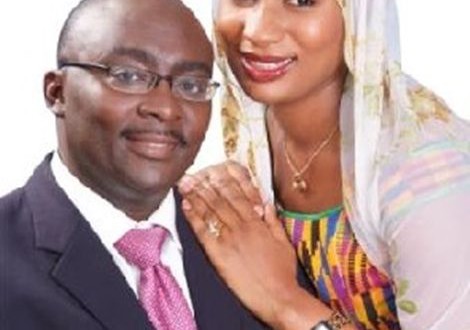
Surprisingly, Samira Bawumia the wife of NPP’s running mate, Mahamudu Bawumia according to Koku Anyidoho is a Fulani.
“Samira Bawumia the wife of Dr. Bawumia is a Fulani, her brother Abu Ramadan is a Fulani. Meanwhile it is this same Fulani boy [Abu Ramadan] who took the NPP’s NHIS case to court which they won. So why should we kill Fulani’s if some NPP members are Fulanis?” he questioned in an interview on NEAT FM’s morning show ‘Ghana Montie’.
Asante Akyem Agogo has been in the news for the past weeks over the killings of natives by Fulani herdsmen – the youth in the town have vowed to retaliate violently since all efforts to stop those Fulanis have been unsuccessful.
But Koku who is against the act alleges that the NPP is behind what could lead to a civil war and xenophobic attacks.
“The NPP is isolating people, this shouldn’t happen,” he told host Kwasi Aboagye.
By: Peacefm Online

Saturday, 30 January 2016

'Fulani women more beautiful than Ghanaian women' – Irbard

Fulani women are more beautiful than Ghanaian women, and, so, there is no need for Fulani herdsmen to go raping Ghanaian women as always claimed by indigenes, who play host to the nomads,” security analyst Irbard Ibrahim has said.
According to him, Fulani women are “light-skinned and attractive,” and, therefore, it is puzzling for their men to be constantly accused of raping the relatively not-so-beautiful Bantu-looking Ghanaian women.

Apart from accusations of farm-trampling by their cattle, shooting, killing, and maiming of indigenes, who play host to them, rape of local girls is a constant feature on the league table of sins of the nomadic herdsmen.

Sheikh Ibrahim, however, told ClassFMonline.com that the rape charge against the herdsmen is illogical, since, in his view, the Fulani men will not prefer Ghanaian women to their more “dainty” and beautiful Fulani women. 

A similar view was expressed last year by the national president of the Fulani community in Ghana, Prof Osman Barry, who described as “ridiculous” claims that Fulani men have been raping Ghanaian women.

Debunking the rape claims against his kith in an interview with Morning Starr host Kafui Dey on Starr 103.5FM on Monday January 12, 2015, the Historian said: “Now you, as you are sitting here my brother, you know the Fulani women how they look like. Can you have any comparison to them?”

“To me it looks very funny because if you say somebody is raping your wife, unless he doesn’t have a wife like yours. And somebody has a wife more than yours, so what are you talking about? If you are talking about sex or you are talking about attraction, these [Fulani] are people who have the most beautiful women in the whole world,” he stressed.

According to him, the Fulani “have very elegant and beautiful women in Africa, south of the Sahara because they are not Negros.”
 
“They are a crossbreed of what we call the Caucasians: The white and the black put them together and they produced…the chocolate colour, the milk colour,” Prof Barry who is also a retired diplomat said, adding that being muslim nomads, the Fulani always need “divine protection”, therefore, “somebody with this nature and everything will not leave his beautiful wife, charming woman and very attractive complex colour and then go and chase another wife…for what reason.”

The Fulani are one of the largest ethnic groups in Africa, numbering approximately 40 million people in total. They are also one of the most widely dispersed and culturally diverse ethnolinguistic groups in Africa.

They are bound together by the common language of Fulfulde. A significant proportion of them – an estimated 13 million – are nomadic, making them the largest pastoral nomadic group in the world. Spread over many countries, they are found mainly in West Africa and northern parts of Central Africa, but also in Sudan and Egypt.

There have been recurrent skirmishes between the Fulani in Ghana’s Ashanti region – particularly in Agogo, as well as other areas in the Eastern region – which have resulted in shootings, killings, decimation of farms and rapes.
Credit: Classfm
Written by Isaac Asempah
source of Happyghana

Saturday, 9 January 2016

Notes From Atlanta'' Is There Such a Thing as “Hausa-Fulani”?

By Farooq A. Kperogi, Ph.D.
Twitter: @farooqkperogi

A reader of this column repeatedly challenged me to justify calling President Muhammadu Buhari a “Hausa-Fulani.” He said he expected me to never give my stamp of approval to the label, which he correctly said was invented, or at least popularized, by the southern Nigerian press. I promised to write on the topic but never got round to doing it.

Then, a few weeks back, I had cause to exchange thoughts on this issue with cerebral Marxist scholar and Daily Trust columnist Professor Jibrin “Jibo” Ibrahim, of the Center for Democracy and Development, who is from Kano. Professor Jibo thinks there is a distinct identity that can legitimately be called “Hausa/Fulani.” "In 1903 the British conquered a Caliphate where a Fulani ruling dynasty was ruling the Hausa people and they made a compact with that dynasty. So yes, there are distinct Hausa and Fulani people, well many are mixed, but there is a political category called Hausa-Fulani that draws from the jihad of 1804," he said.
I disagree, not least because he invoked colonial conquest as the social and political basis for the legitimacy of his claim. But, then, why did I call President Buhari “Hausa-Fulani” if I disagree with Professor Jibo? Well, when we interviewed Buhari in 1999 at the Weekly Trust, I distinctly recall him telling us that he loved the label “Hausa/Fulani” because it perfectly encapsulates the tapestry of his identity; his father, he said, is Fulani and his mother is half Hausa and half Kanuri. Besides, although he is ethnically Fulani patrilineally, he is culturally and linguistically Hausa. What better label can capture this ethnic and cultural coalescence than “Hausa-Fulani,” he asked. Well, I like to respect and call people what they call themselves.

But many northern intellectuals, including the late Dr. Yusufu Bala Usman, Professor Jibo’s former teacher, resent (in the case of the late Dr. Bala resented) the label “Hausa-Fulani.” As someone who studies the rhetorical construction of identities, I also think “Hausa-Fulani” as an overarching ethnic category for people who live in Nigeria’s far north is meaningless. And here is why.

 It isn't only in Hausa land that Fulani dynasties ruled over, merged with, and became culturally indistinguishable from their non-Fulani hosts. You can find examples of that sort of cultural and ethnic alchemy in Nupe land and in Ilorin, yet we don't have fossilized hyphenated identity labels for these people. In other words, there are no "Nupe-Fulani" or "Yoruba-Fulani." So why should there be "Hausa-Fulani"?

I admit that the cultural and ethnic melding of the Hausa and the Fulani people (whose languages are not only mutually unintelligible but also, in fact, belong to different language families) is on a scale of intensity that is unexampled anywhere in Nigeria—perhaps in Africa—, but that doesn't, in my opinion, justify the appellative hyphenation many of us have become fond of.

 In most Nigerian cultures, descent is traced patrilineally. I am Baatonu because my father, my grandfather, my great-grandfather, etc. are—or are thought to be—Baatonu; the ethnic identity of my matrilineal lineage is immaterial to the determination of my ethnic identity. Nor are my contemporary associational, cultural, or linguistic identities factored in in determining my ethnicity. A person who is patrilineally Hausa is Hausa irrespective of the amount of Fulani blood in him or her, which makes the hyphenation of "Hausa" and "Fulani" pointless.

What I have described above is broadly true of most African societies. (Certain matrilineal Ghanaian societies are notable exceptions here). That's why the Luos of Kenya regard President Barack Obama as a Luo. Although he is culturally American and has no connection with the Luo cultural and linguistic universe, except on a vicarious and symbolic level, he is seen as "authentically" Luo by the Luo in Kenya and elsewhere. The Luo would most certainly have never had this much emotional investment in Obama's “Luoness” had he been Luo only on his mother’s side.

So the hyphenation of ethnic identities on account of cultural, ethnic, and linguistic commingling is an anthropological anomaly on the African continent. Although the "Hausa-Fulani" label has come to stay, it can't be justified historically, linguistically, or anthropologically. In its present form, it was invented by the southern Nigerian press, which lacked the historical and sociological resources to make sense of the ethnic complexity of Nigeria's (far) north. So they manufactured a convenient, if problematic, label. Professor Jibo disputes this. “[John] Paden's book on Ahmadu Bello draws attention to the formation of a Hausa-Fulani political identity in Barewa College way back in the 1920s,” he said.

But that doesn’t really say much. We talk of a “Hausa-Fulani” identity today not because some barely mature high school students with vague inchoate ideas about identity thought it into being; we do because the enjoys repeated media mentions and validation. In his classic book titledImagined Communities: Reflections on the Origin and Spread of Nationalism, Benedict Anderson tells us that the emergence of identities in Europe was enabled by the symbolic power of “print capitalism,” by which he means newspapers and books. That was why Buhari, an enthusiast of the “Hausa-Fulani” label, told us in 1999 that one of the greatest, if unintended, favors that southern newspapers have bestowed on the far north was their invention and popularization of the Hausa-Fulani label.

Nevertheless, one of my quarrels with the label is its notorious imprecision. For instance, the late Sir Abubakar Tafawa Balewa was and still is often called a “Hausa-Fulani” by the southern press even though he was born of a Shuwa Arab father and a Fulani mother.

Another problem with the label is that it erases the identity of millions of ethnically and culturally “unmingled” Fulani people in Nigeria’s northeast and elsewhere. Former super permanent secretary Malam Ahmed Joda once told us at the Presidential Villa (when I worked there) that the first time he left his native Yola to Lagos in pre-independence Nigeria he couldn’t speak a word of Hausa, but Yoruba people in Lagos couldn’t wrap their heads around that. It made no sense to them that a Fulani man couldn’t speak Hausa since both identities have been conflated and made to seem indistinguishable in the popular media.


 The examples are legion, but the point is that "Hausa-Fulani" is an inexact, endlessly kaleidoscopic identity label that even includes non-Hausa-speaking Kanuris and all Hausa-speaking northern Nigerian Muslims who are ethnically neither Hausa nor Fulani.